

Your past keeps showing up when you least expect it
EMDR and trauma therapy in Teaneck and Bergen County
Something happened. It was real. It was scary. And even though it's over, your nervous system doesn't seem to know that yet.
EMDR Near me
A sound triggers you. A smell. A moment that should be ordinary suddenly isn't. Your body tenses. Your mind floods with the memory. And you think: I shouldn't still be this affected. It's been so long.
But you are. And it makes sense. Trauma doesn't just live in your memory. It lives in your body, in how you respond to the world, in what you believe about yourself and safety.
You're not broken because you're still affected. You're affected because what happened was real, and your brain is still trying to keep you safe from it. The question is: what if you could help your brain move it to where it belongs—a memory that happened, not something that's happening now?
That's what EMDR does.

What EMDR actually is—in plain terms
Trauma Therapy Techniques

EMDR stands for Eye Movement Desensitization and Reprocessing. That's a lot of jargon. Here's what it actually means:
Your brain has a natural way of healing from trauma. But when something is too big or too scary, your brain gets stuck. The memory stays in the foreground, still triggering, still powerful. EMDR helps your brain do what it's naturally designed to do: process and move past it.
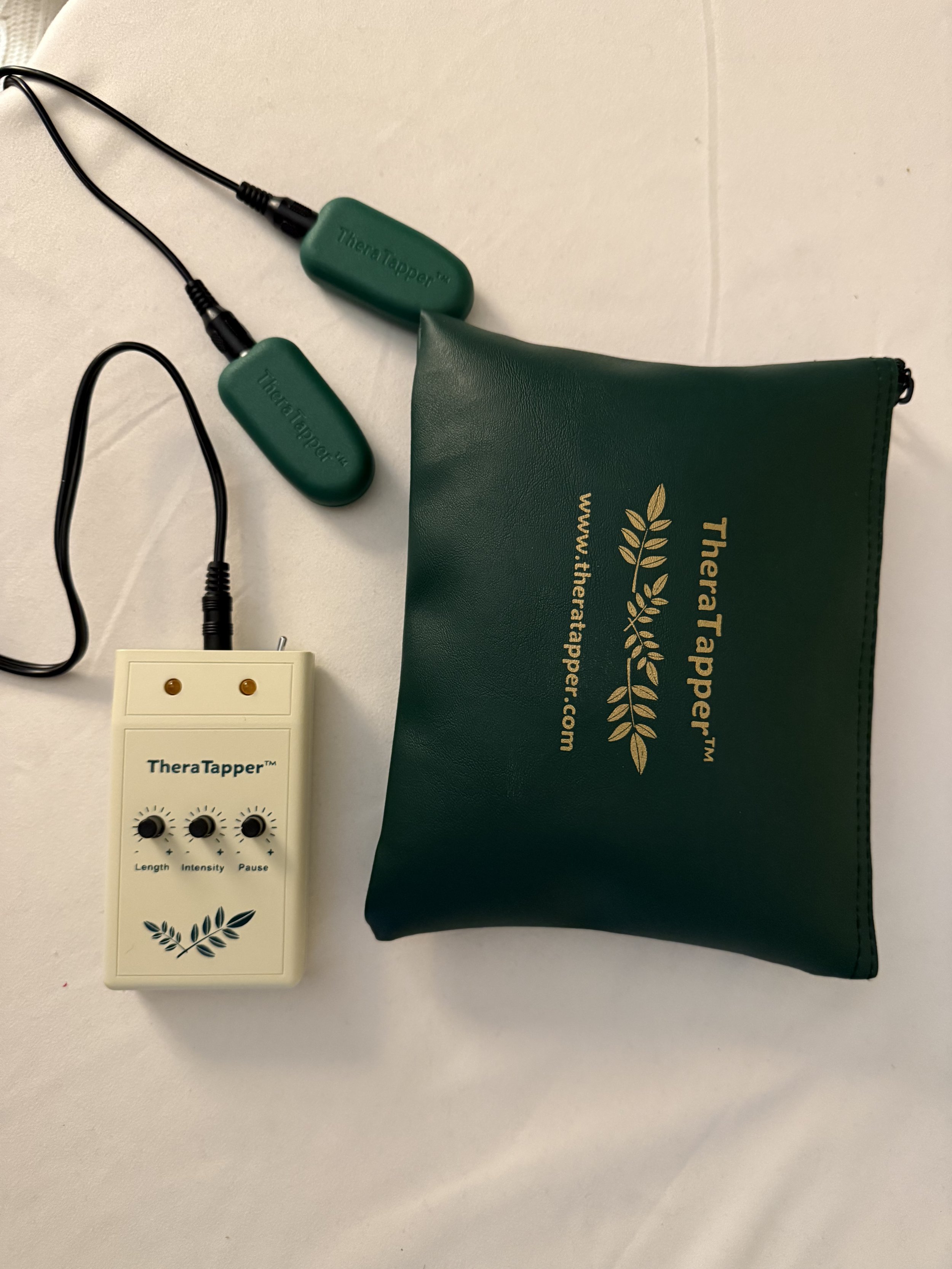
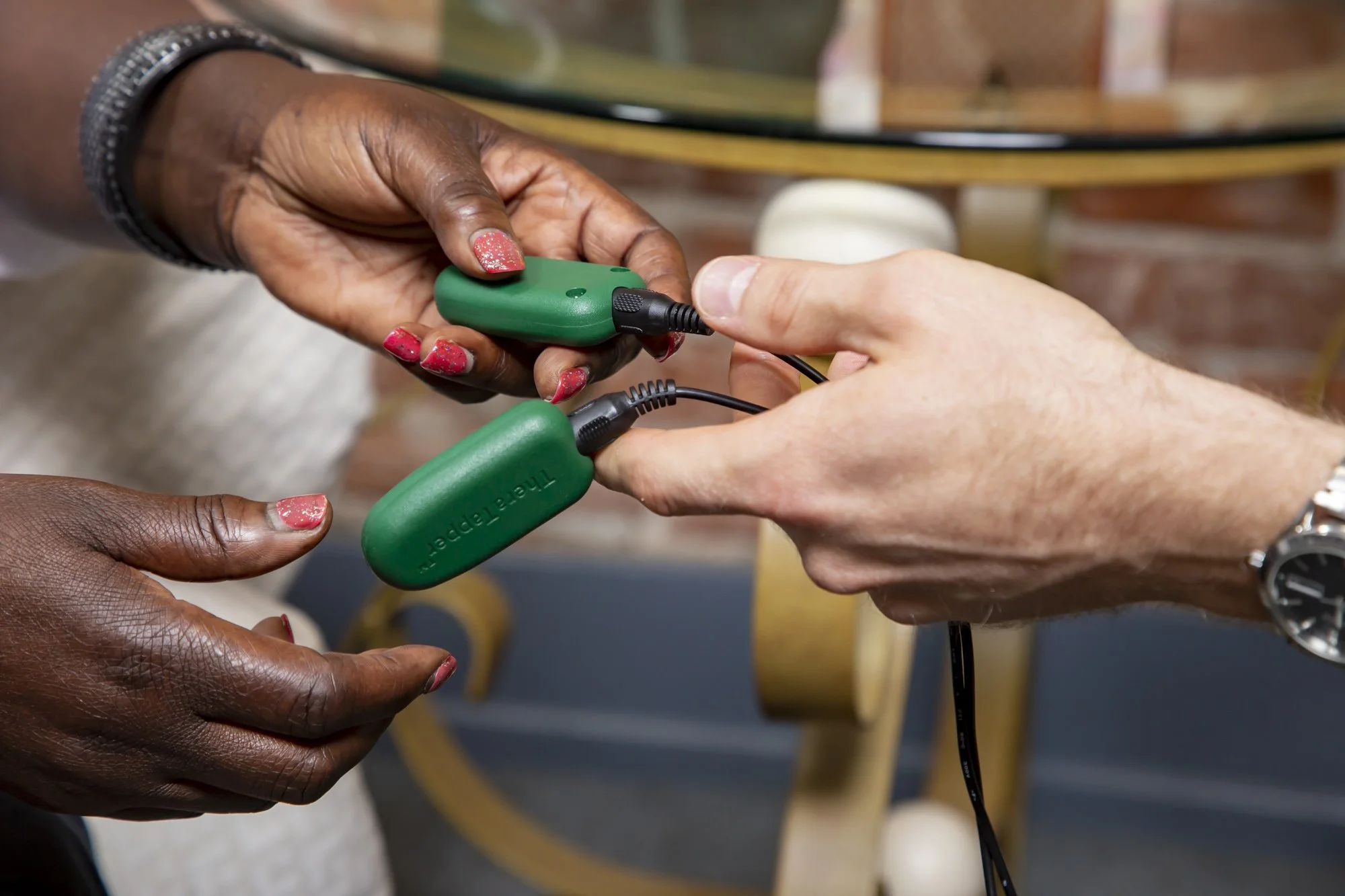
Here's how: In my office, we use gentle tappers—soft vibrations that stimulate both sides of your body in a rhythm we control together. This bilateral stimulation, combined with the memory you're processing, helps your brain metabolize the trauma differently. It's not talk therapy alone. Your body is doing the healing work.
The goal is to take what feels like a big T trauma—something that controls your life—and move it to a little t trauma. A memory. Something you can remember without it hijacking your nervous system.
“EMDR helps your brain process painful memories in a safe, guided way so they don’t feel as overwhelming anymore”
The kinds of trauma I work with
I work with all kinds of past trauma—but I specialize in birth trauma.
That specialization matters. I came to this work as a birth doula. I was with parents through labor, through fear, through medical complications, through moments when things changed in ways they never expected. I know what it feels like to have your autonomy stripped away in that moment. I know how it reverberates afterward.
Now, as a therapist trained in EMDR, I bring that understanding into every session with someone healing from birth trauma. I'm not speaking from a textbook. I'm speaking from having witnessed what you went through. And that changes everything about how I work with you.
EMDR works with any past trauma—PTSD from accidents, loss, abuse, medical events, or anything else that left a mark. The modality is the same. But the understanding I bring to birth trauma is specific and deep.
How EMDR is different from talk therapy

Talk therapy is valuable. But it can take a long time, and it doesn't always reach the core belief system that the trauma created. I'm not safe. I can't trust my body. I'm powerless.
EMDR works faster because it uses your body's own healing mechanism. With each session, you notice shifts almost immediately. You go deeper. You address new layers of the trauma or untangle complex trauma, one piece at a time, moving it toward neutral.
You're not spending years talking about what happened. You're actively processing it, with your brain and body doing the work they're designed to do.
“Healing doesn’t mean forgetting what happened—it means your past no longer has power over how you feel today.”
Here's what I want you to know if you're afraid to revisit the past:
You don't have to relive this more than you already are. You're here because this trauma is already affecting you, already taking up space in your daily life. Already running the show. I'm not asking you to dive back into the worst moment. I'm asking you to help your brain process what's already been affecting you—so you can take your power back.
Our sessions are controlled and safe. Everything moves at your pace. You set the intensity of the tappers. If it feels too overwhelming, we slow down. We pause. We adjust. There is no rushing. There is no pushing you further than you want to go.
My work with somatic and inner child work runs alongside EMDR because trauma lives in your body and often starts in childhood. EMDR helps address all of it—not just the memory, but what your nervous system learned to believe about safety, about you, about the world.

What happens in an EMDR session—and why it's safe
“You deserve to feel at peace again—EMDR can help you move forward with clarity, strength, and hope.”

EMDR therapy in teaneck nj
Commonly Asked Questions about EMDR -
EMDR (Eye Movement Desensitization and Reprocessing) is a type of therapy that helps your brain process and heal from difficult or overwhelming experiences. It uses gentle, guided techniques—like eye movements or tapping—to help “unstick” memories so they feel less distressing.
-
No. One of the benefits of EMDR is that you don’t have to go into every detail of your experience. Your therapist will guide you in a way that feels safe and manageable for you.
-
EMDR helps your brain reprocess memories so they are stored in a healthier way. The bilateral stimulation (like side-to-side eye movements) supports your brain in reducing the emotional intensity connected to those memories.
-
Everyone’s experience is a little different, but many people notice thoughts, feelings, or images coming up and then gradually becoming less intense. You remain aware and in control the whole time, with your therapist supporting you.
-
Some people notice changes in just a few sessions, while others may take longer depending on their experiences and goals. Your therapist will work with you at a pace that feels right.
-
While EMDR is well known for helping with trauma and PTSD, it can also support people with anxiety, panic, phobias, and negative self-beliefs.
-
Yes. EMDR is a well-researched and widely used therapy approach. Your therapist will make sure you have tools to feel grounded and supported throughout the process.
-
That’s completely normal. Starting any kind of therapy can feel like a big step. A good therapist will go at your pace, answer your questions, and help you feel safe every step of the way.
What healing actually feels like
As you move through EMDR, you notice something shifting. The memory is still there, but it doesn't have the same charge. You can think about what happened without your body bracing. A trigger that used to send you spiraling becomes manageable.
You start to feel like yourself again. You're more present. Less reactive. You can be in situations that used to terrify you.
And something deeper happens: you start to be kinder to yourself. You realize the shame you've been carrying—I should be over this by now, I should be stronger, I should have known better—doesn't belong to you. It was part of how your brain tried to protect you. And now you can let it go.
That self-compassion? That's the most radical form of empowerment. That's what sets you free.
Let's help your brain move forward
If you're carrying trauma and you're ready to stop living like it's still happening, I'm here. My office is in Bergen County, and I work with clients in person here in New Jersey and New York.
Your past doesn't have to keep showing up in your present.

Call for a complimentary 15 minute consultation
Our Services
-

Family Therapy
Are you struggling with family communication or emotional distance? As a family therapist in Teaneck, NJ, I help you achieve these goals. Together, we'll work on improving communication, resolving misunderstandings, and creating a more connected, resilient family.
-

Marriage Counseling
Do you want to rebuild trust, ease conflicts, or strengthen your relationships? We offer a unique and powerful way to address relationship dynamics by integrating both psychological and biological perspectives.
-

Postpartum Depression
The transition to parenthood often brings changes in intimacy, communication, and relationship dynamics. Let’s work together to help ease this transition.
-

Trauma Therapy
When you’re inner child is suffering you are suffering. Whether you're facing life transitions, parenting challenges, or emotional stress, I’m here to guide you toward a healthier, more harmonious family dynamic. Let’s start your journey to lasting change.